

Claire Levene
Solicitor
Lorem ipsum..
Solicitor | Medical Negligence
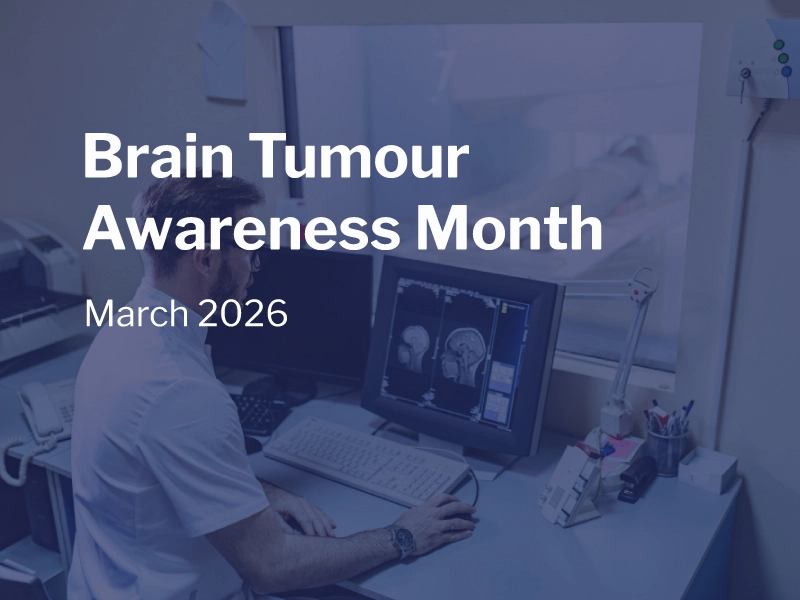
Brain Tumour Awareness Month – March 2026
As we approach the end of Brain Tumour Awareness Month, it is important to reflect on a condition that affects thousands of people across the UK and remains widely misunderstood.
Brain tumour awareness is a subject that is close to my heart. Each month, more than 1,000 people in the UK are diagnosed with a brain tumour. It is estimated that 1 in 3 people know someone affected by a brain tumour, yet many of us do not fully understand the true impact of living with such a diagnosis.
Understanding Brain Tumours
There are over 100 different types of brain tumour, which can be either cancerous or benign (non-cancerous). The effect of a brain tumour and the prognosis will depend on several factors, including its type, whether it is cancerous, its location within the brain, its size, and whether it is suitable for surgical or non-surgical treatment.
Some people may continue to live relatively normal day-to-day lives for many years, while others may experience significant emotional and mental health challenges, physical symptoms, functional difficulties, and even cognitive or personality changes.
For example, glioblastoma, a malignant and highly aggressive tumour accounting for around 50% of all cancerous brain tumours in adults, can cause severe and rapidly worsening symptoms due to fast tumour growth and raised intracranial pressure. It is often difficult to treat and generally carries a poor prognosis.
In contrast, meningiomas, which develop in the membranes surrounding the brain, are usually slow-growing and benign, and typically have a more favourable prognosis.
The Need for Greater Awareness and Research
Despite 1 in 3 people knowing someone affected by a brain tumour, and despite brain tumours being a leading cause of cancer-related deaths in children and adults under 40, research into brain tumours remains chronically underfunded in the UK.
It is understood that only around 3% of national cancer research funding is allocated to brain tumour research.
The Brain Tumour Charity is campaigning for increased funding and is encouraging people to write to their MP in support of this cause. More information can be found on their website.
Get involvedDelayed Diagnosis and Medical Negligence Claims
Brain tumours can affect both adults and children. Our solicitors have experience in handling claims involving delays in the diagnosis of brain tumours in both groups.
Cases have included:
- Delay in diagnosis and treatment of astrocytoma
- Delay in diagnosis and treatment of medulloblastoma
- Delay in diagnosis and treatment of ependymoma
- Delay in diagnosis of raised intracranial pressure
- Delay in diagnosis of meningioma
How We Can Help
If you would like to explore the possibility of bringing a medical negligence claim, please contact us on 0151 306 3694 to speak to a member of our specialist team in confidence.
0151 306 3694March is also Endometriosis Awareness Month, Ovarian Cancer Awareness Month, and Cerebral Palsy Awareness Month. Read our related articles to learn more about these conditions and medical negligence:
Endometriosis Awareness Month 2026 | Delayed Diagnosis Claims
Endometriosis Awareness Month – March 2026 March marks Endometriosis Awareness Month – a time to [...]
Mar
Ovarian Cancer Awareness Month | Delayed Diagnosis & Medical Negligence
Ovarian Cancer Awareness Month March marks Ovarian Cancer Awareness Month, a vital opportunity to raise [...]
Mar
Cerebral Palsy Awareness Month 2026 | Medical Negligence Claims & Support
Cerebral Palsy Awareness Month 2026 March is Cerebral Palsy Awareness Month, with National Cerebral Palsy [...]
Mar