
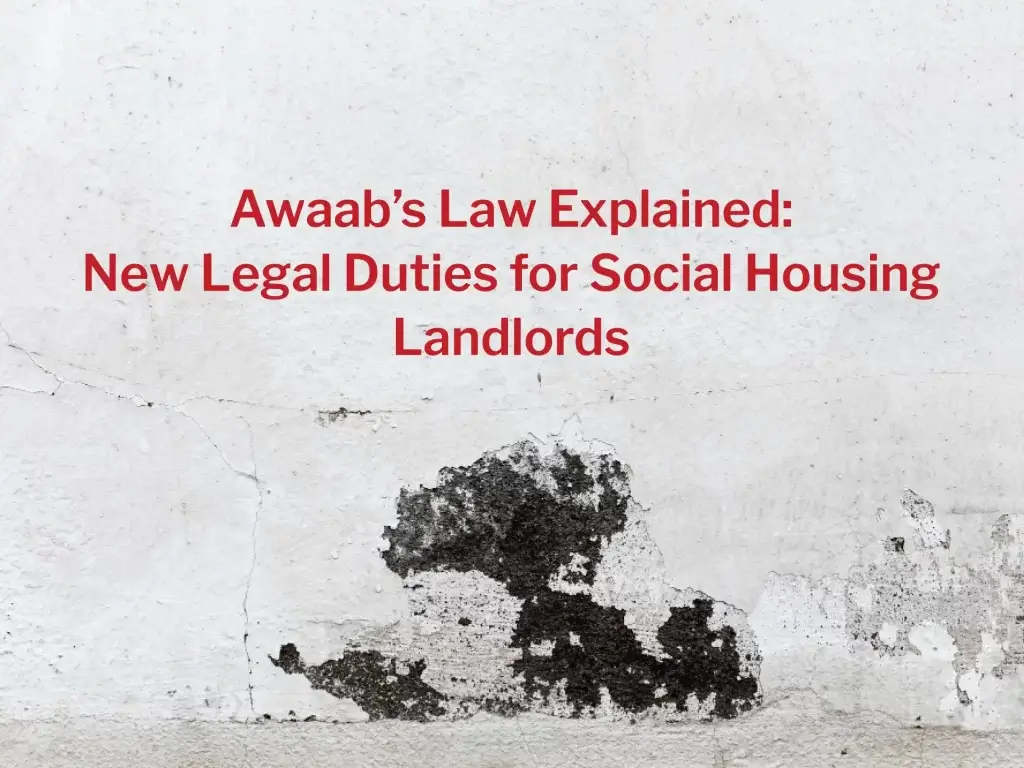
Awaab’s Law
The Social Housing (Regulation) Act 2023 — more commonly referred to as Awaab’s Law — is set to come into force on 27 October 2025, marking a significant development in housing law in England and Wales.
The Act introduces mandatory timeframes for social housing providers to investigate and address issues of damp and mould, strengthening protections for tenants living in unsafe conditions.
Key Provisions of Awaab’s Law
Under Awaab’s Law, social housing landlords will be legally required to:
- Investigate complaints of damp and mould within 10 working days
- Provide tenants with a written report following the investigation
- Complete necessary works within 5 working days to make the property safe
- Where the issue is classified as an emergency repair, take action within 24 hours
Failure to comply with these statutory timeframes may amount to a breach of contract, giving tenants the right to pursue legal action against their landlord.
Background: Why Awaab’s Law Was Introduced
Awaab Ishak, born in December 2018, tragically died in December 2020 as a result of a respiratory condition caused by prolonged exposure to damp and mould in his family home. A post-mortem examination revealed the presence of fungal spores in his lungs, bringing national attention to the severe risks posed by unsafe housing conditions.
Awaab’s death highlighted the urgent need for stronger legal obligations on landlords to act swiftly when tenants report hazardous conditions—particularly those with serious health implications such as damp and mould.
Implications of the New Law for Social Landlords and Tenants
The introduction of Awaab’s Law represents a clear shift in accountability. Social landlords will now face:
- Increased scrutiny from the Regulator of Social Housing
- Enhanced oversight by the Housing Ombudsman
- Clearly defined statutory duties with strict response and repair deadlines
Crucially, the law empowers tenants to enforce their rights through legal channels where landlords fail to meet these obligations.
From 2027, the scope of the legislation is expected to expand further to cover a wider range of hazards under the Housing Health and Safety Rating System (HHSRS).
Our View at Phoenix Legal Limited
While Awaab’s Law is undoubtedly a milestone in housing law, we believe its full impact will only be achieved when its protections are extended to all tenants, including those:
- Living in the private rented sector
- Residing in temporary accommodation
We also believe further reform is needed around the identification and accountability of landlords. While there are increasing calls for tenant ID checks, the question remains: who is properly checking the landlords?
Until these gaps are addressed, many vulnerable tenants may continue to face unacceptable living conditions.
How Phoenix Legal Limited Can Help
At Phoenix Legal Limited, we are committed to supporting tenants in enforcing their rights under Awaab’s Law and holding landlords accountable when they fail to meet their legal duties.
If you are living in unsafe or poorly maintained housing, our experienced Housing Disrepair Team is here to help you take action.
0151 306 3694 ab@phoenixlegalsolicitors.co.ukConfidential advice is available—contact our team today.
Pingback: The Renters’ Rights Bill 2025: What It Means for Landlords & Tenants | My Tenancy Deposit Claims