
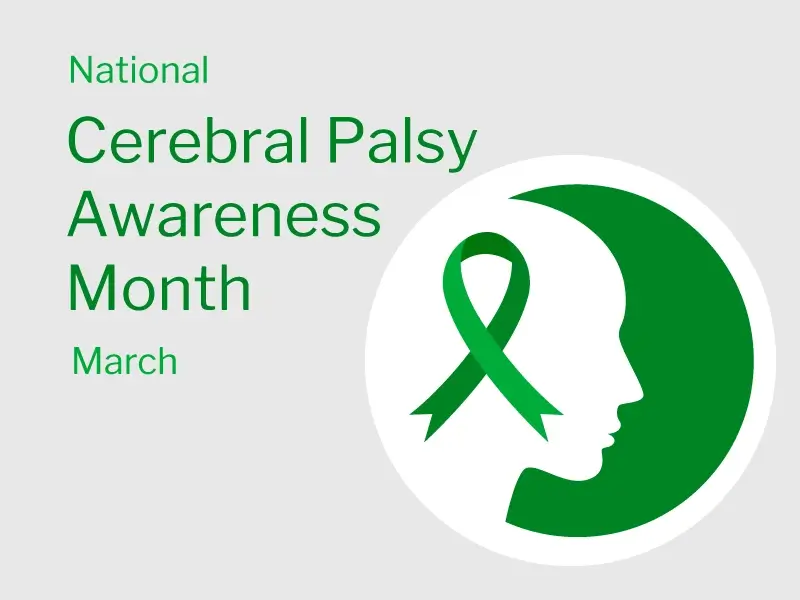
Cerebral Palsy Awareness Month 2026
March is Cerebral Palsy Awareness Month, with National Cerebral Palsy Awareness Day falling on 25 March 2026.
Cerebral Palsy is the name for a group of lifelong conditions that affect movement and co-ordination. It is usually caused by an injury to the brain that occurs before, during or soon after birth. In some cases, this may result from a lack of oxygen (hypoxia), infection, or abnormal brain development.
Cerebral palsy is usually diagnosed at birth or in early childhood. It is not a learning disability, although some people with cerebral palsy may also have a learning disability.
You can obtain further information from the NHS here:
Cerebral Palsy - NHSRaising Awareness and Driving Change
The Cerebral Palsy Awareness initiative has been running for around 20 years. Individuals with cerebral palsy, their families, clinicians, charitable organisations and advocates collaborate to promote positive change and greater awareness of the challenges faced by people with cerebral palsy — particularly in relation to education, healthcare, equality and inclusivity.
There are many excellent organisations working to support people with cerebral palsy and their families, and to champion greater awareness. These include:
Regional Cerebral Palsy Support Groups
There are also many regional cerebral palsy support groups across the UK, including:
These organisations provide invaluable advice, practical support and community connection for individuals and families.
When Cerebral Palsy Is Caused by Medical Negligence
In some cases, cerebral palsy can arise as a result of medical negligence — for example, where there has been a failure to monitor foetal distress, delay in delivery, mismanagement of oxygen deprivation, or failure to treat infection appropriately.
Where this is the case, it may be possible to pursue a claim for financial compensation to help fund:
- Specialist therapies
- Rehabilitation and care
- Adapted accommodation
- Specialist equipment
- Long-term support needs
If you are concerned that negligent medical care may have contributed to your child’s condition, it is important to seek legal advice at an early stage.
If you have copies of medical records, a hospital’s internal serious incident review report, or correspondence relating to a complaint, these documents may be helpful. However, do not worry if you do not have them — your solicitor can obtain the relevant records directly from the hospital.
How We Can Help
Our solicitors work collaboratively with our clients and their families to support them in bringing medical negligence claims. We focus not only on securing compensation, but also on helping families access the support and services they need.
If you would like to explore the possibility of bringing a medical negligence claim, please contact us on 0151 306 3694 to speak to a member of our specialist team in confidence.
0151 306 3694 Other ways to contact