

Claire Levene
Solicitor
Lorem ipsum..
Director & Solicitor | Personal Injury & Medical Negligence
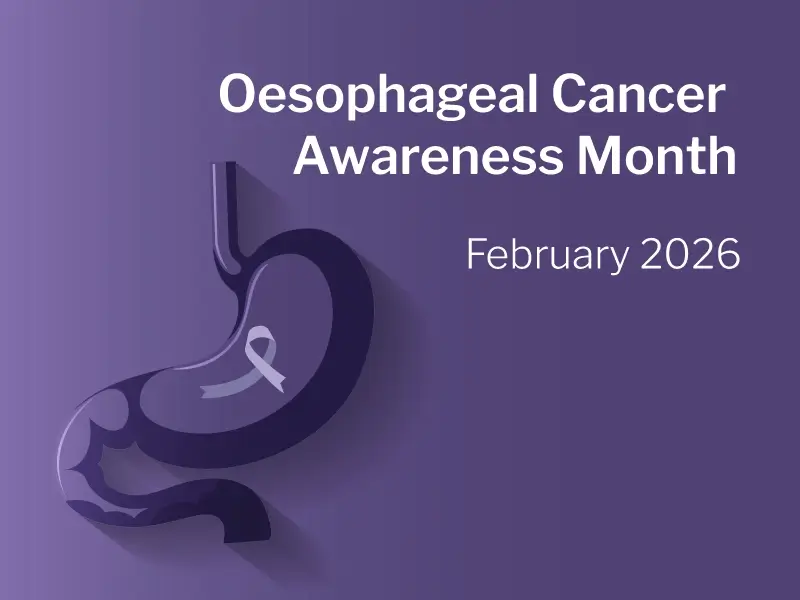
Oesophageal Cancer Awareness Month
Oesophageal Cancer Awareness Month, held each February in the UK, aims to raise awareness of symptoms and the importance of early diagnosis. In the UK, around 9,000 people are diagnosed with oesophageal cancer each year, making it the 14th most common cancer in the UK.
What Is Oesophageal Cancer?
The oesophagus connects your mouth to your stomach. It is sometimes called the gullet or food pipe. Oesophageal cancer develops when the cells lining the oesophagus become damaged.
Oesophageal cancer can develop anywhere along the oesophagus. How serious it is depends on where it is located, how large it is, whether it has spread, and your general health.
Early diagnosis is crucial. However, symptoms are sometimes mistaken for common digestive issues such as acid reflux or indigestion.
Symptoms of Oesophageal Cancer
There are many possible symptoms, and they can sometimes be difficult to spot.
Symptoms may include:
- Problems swallowing
- Feeling or being sick
- Heartburn or acid reflux
- Indigestion, including burping frequently
- A cough that does not improve
- A hoarse voice
- Loss of appetite and unintentional weight loss
- Feeling tired and lacking energy
- Pain in your throat or in the middle of your chest
These symptoms are common and can be caused by many different conditions.
Experiencing these symptoms does not necessarily mean you have oesophageal cancer, but it is important to seek medical advice, particularly if symptoms persist.
Potential Causes and Risk Factors
The exact cause of oesophageal cancer is not always clear, and anyone can develop it.
However, you may be at higher risk if:
- You are over the age of 75
- You are male
- You have long-term acid reflux or Barrett’s oesophagus
It may also be linked to lifestyle factors. For example, the risk is higher if you are overweight, smoke, or drink excessive amounts of alcohol.
Treatment Options
The treatment you receive will depend on the size and type of oesophageal cancer, where it is located, whether it has spread, and your overall health.
Treatment options will be discussed with you and may include:
- Chemotherapy
- Radiotherapy
- Immunotherapy
- Surgery
Delayed Diagnosis and Medical Negligence Claims
Unfortunately, oesophageal cancer can sometimes be misdiagnosed or diagnosed at a late stage. Delays may occur where:
- Persistent symptoms are not properly investigated
- Urgent referrals are not made
- Test results are misinterpreted
- Endoscopy or imaging is unreasonably delayed
If an earlier diagnosis would likely have led to more effective treatment or improved prognosis, you may be entitled to bring a claim.
How We Can Help
If you or a loved one has suffered harm as a result of delayed diagnosis or medical negligence, our specialist team can advise you on your options and whether you may be entitled to compensation.
Call us on 0151 306 3694 to discuss making a claim on a no win, no fee basis.
0151 306 3694 ab@phoenixlegalsolicitors.co.uk