
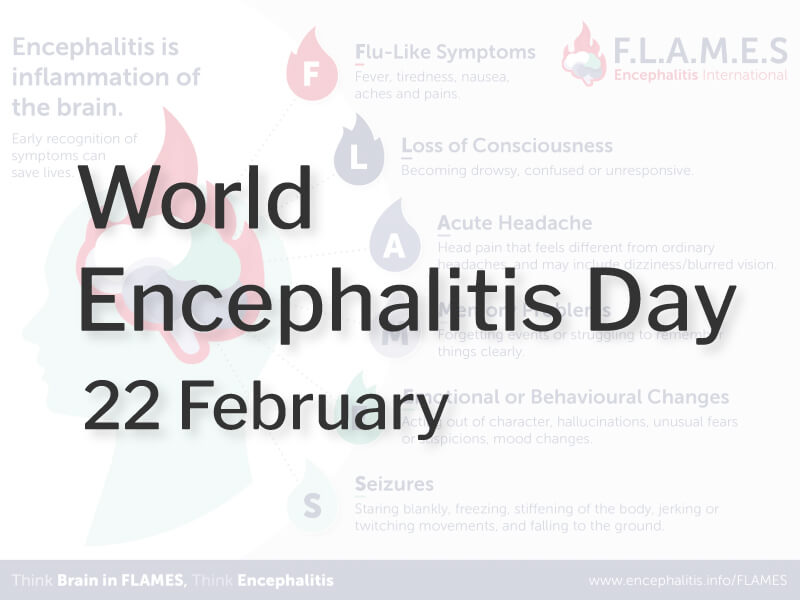
World Encephalitis Day – 22 February 2026
22 February 2026 marks World Encephalitis Day, a global awareness campaign highlighting a serious and often misunderstood condition that affects hundreds of thousands of people each year.
Encephalitis affects over 500,000 people worldwide annually. The condition has an estimated 1.44 million cases globally and causes approximately 89,900 deaths. In the UK, there are around 6,000 cases each year.
Every 20 seconds, someone in the world is diagnosed with encephalitis. The speed of that diagnosis can save their life — or significantly alter it.
What Is Encephalitis?
Alarmingly, 77% of people have never heard of encephalitis.
Encephalitis is an uncommon but serious condition in which the brain becomes inflamed. It can be life-threatening and requires urgent hospital treatment. Anyone can be affected, but the very young and the elderly are most at risk.
What Are the Signs and Causes of Encephalitis?
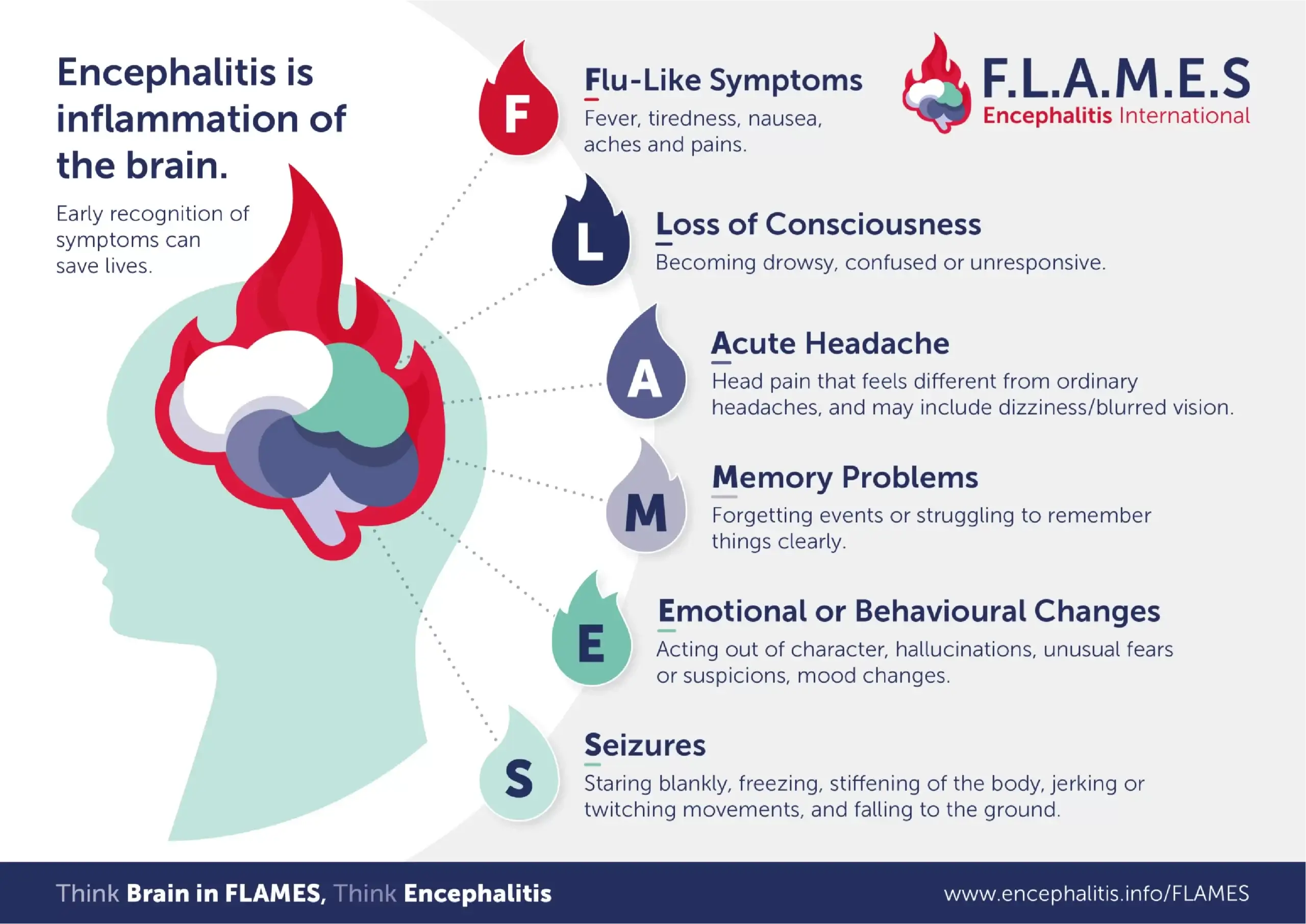
Recognising the symptoms early is critical. The acronym FLAMES represents the urgent neurological signs that everyone should be aware of to help identify encephalitis sooner:
F – Flu-like symptoms
L – Loss of consciousness
A – Acute headache
M – Memory problems
E – Emotional or behavioural changes
S – Seizures
Encephalitis often begins with flu-like symptoms such as a high temperature and headache. More serious symptoms may develop progressively, including:
- Difficulty speaking
- Confusion
- Weakness or loss of movement
- Loss of consciousness
- Seizures
The exact cause of encephalitis is not always clear. However, it can be triggered by:
- Viral infections
- Problems with the immune system (autoimmune encephalitis)
- Bacterial infections
- Fungal infections
How Is Encephalitis Treated?
Encephalitis requires urgent hospital admission. Early diagnosis and treatment significantly improve outcomes.
Treatment depends on the underlying cause and may include:
- Antiviral medication
- Steroid injections
- Antibiotics
- Breathing support in severe cases
Some people diagnosed with encephalitis make a full recovery, although this can be a long and challenging process.
However, many individuals are left with long-term complications caused by brain damage, including cognitive difficulties, behavioural changes, seizures, or physical disability.
The Impact of Delayed Diagnosis
Early diagnosis and treatment are crucial. A delay in recognising encephalitis symptoms or a misdiagnosis can have devastating consequences.
Failure to identify the warning signs promptly may result in delayed treatment, which can lead to:
- Permanent brain injury
- Life-changing disabilities
- Ongoing neurological problems
- In the most serious cases, death
Where a delay in diagnosis occurs due to medical negligence — such as failing to investigate symptoms appropriately or not acting on clear warning signs — affected individuals and families may be entitled to pursue a claim.
How We Can Help
If you or a loved one has suffered harm due to a delayed or missed diagnosis of encephalitis, our specialist team can advise you on your legal options and whether you may be entitled to compensation.
We understand the life-changing impact neurological injuries can have on individuals and families, and we are here to provide clear, supportive guidance.
Call us on 0151 808 2429 to discuss your situation on a No Win, No Fee basis.
0151 306 3694